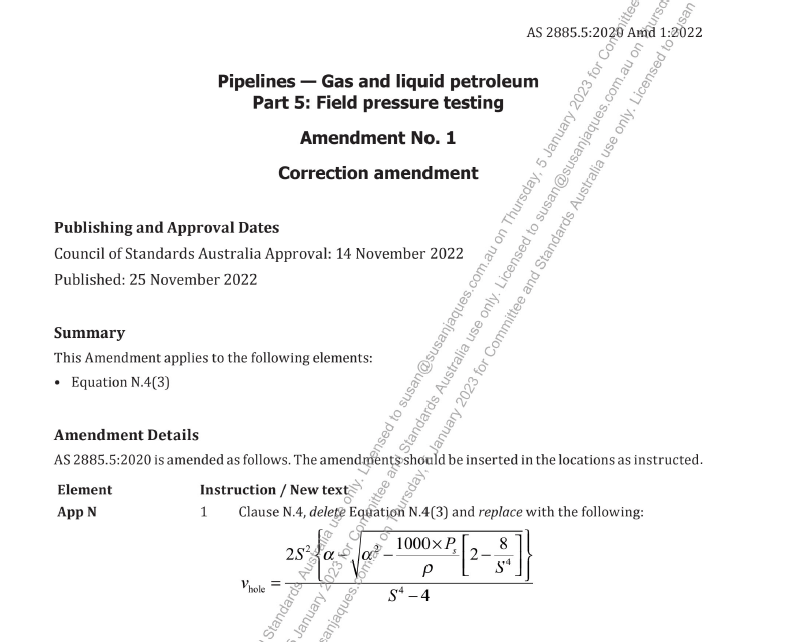
In AS2885.5:2020 Field Pressure Testing, Equation N.4(3) is incorrect.
A correction amendment has been issued by Standards Australia, with the equation corrected.
It is provided here, to ensure users of AS2885.5 have the correct information.
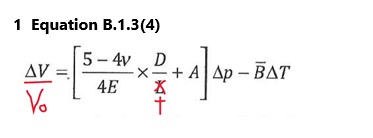
Please also note that another correction amendment is underway, for Equation B.1.3(4) and Equation B.2(1). Please make a note of this if you have hard copies. Those with subscription licenses just need to access the latest version online, which will include the revision (not yet for these below though, not until it’s officially issued).
(January 5th, 2023: This first week of the new year, before I’d really gotten my feet under the desk yet, has seen a good email exchange amongst ME-038 about the adoption of ISO standards. I had the post below sitting in the drafts section of WordPress, waiting to be published here, wouldn’t you know it, next week. But in light of the sudden interest in this topic, I’ve brought forward the information for the rest of the industry to be aware of)
Adopting ISO Standards
There’s always been an underlying intention to ‘mirror’, or adopt, whenever possible, existing international (ISO) standards into the Australian framework.
By “whenever possible”, that means someone has to make the effort to adopt them. Currently Liam Hatchell, our ISO Liaison, is putting in that effort.
By “whenever possible”, we also mean that if an ISO Standard exists, and we in the Australian pipeline community don’t have particular expertise in that area, then that’s a reason to adopt it.
Here are some points that Liam has put out there for us to know:
Adopting these standards does not mean we are mandating them. It is an endorsement from the relevant committee that they “reflect the best experience of industry and regulators worldwide” and are suitable for application here in Australia if selected. The aim being that should an “Unnamed Pipeline Engineer” in the future want to put something in place to (for example) specify an induction bend, they can comfortably choose to call up ISO 15590 knowing that we have reviewed it and endorsed its content. As such, in the Aus pipeline industry it is my expectation that AS2885 will be the standard that will continue to be mandated, and only if we (over time) get comfortable enough with the sub-ISO standards to specifically instruct usage, will they then be mandated. What this means is that we can adopt these standards, but it does not necessarily prevent users from selecting other equivalent international standards at this time.
It has been a work in progress of mine (Liam’s) for over 10yrs now, but we now have nominated experts on 85% of the active working groups within ISO TC67 SC2. Should we choose to adopt all or some of these ISO standards then this greatly increases our justification to be more actively involved, and to participate vocally and actively in any future development. Taking this approach should (taking ISO 15590 as an example again) shift our focus away from feeling we need to develop our own standard, and ensure we put more effort into actively being involved in the ISO document. Note: we are a well respected member of this ISO committee, so if we ever wish to drive change in any standard then we are always able to put forward a proposal to ISO to lead or trigger a revision.
Thanks, Liam!
The list of ISO Standards below are currently being shepherded through the adoption process. Again, I’d like to thank Liam for his work on this, as some of the Standards below could be of good value for us in Australia to know about.
The adoption process doesn’t mean they are mandated, only that we recognise these Standards and maybe won’t need to develop our own.
If there are any here that you have a differing view of (ie, it shouldn’t be adopted), let us know. Standards Australia has asked for feedback by 20/01/2023, but if that date has passed when you read this, and you have an opinion, don’t let that date stop you. It’s still a process to get through, so there may be time yet.
ISO Standard
Title
ISO 12490:2011
Mechanical integrity and sizing of actuators and mounting kits for pipeline valves
ISO/TS 12747:2011
Recommended practice for pipeline life extension
ISO 14313:2007
Pipeline valves
ISO 14313:2007/COR 1:2009
Pipeline valves — Technical Corrigendum 1
ISO 14723:2009
Subsea pipeline valves
ISO 15590-1:2018
Induction bends, fittings and flanges — Part 1: Induction bends
ISO 15590-2:2021
Induction bends, fittings and flanges — Part 2: Fittings
ISO 15590-3:2022
Induction bends, fittings and flanges — Part 3: Flanges
ISO 15590-4:2019
Factory bends, fittings and flanges — Part 4: Factory cold bends
ISO 16440:2016
Design, construction and maintenance of steel cased pipelines
ISO 20074:2019
Geological hazard risk management for onshore pipeline
ISO 21329:2004
Test procedures for mechanical connectors
ISO 21857:2021
Prevention of corrosion on pipeline systems influenced by stray currents
Ted Metcalfe provides me (us) with much insight and deep thinking about engineering, competency, ethical behaviour, learning from (engineering/technical) failures, and all kinds of other issues and aspects of life. He’s semi-retired but thankfully not sailing off into the sunset yet.
He often talks about raising the competency/skills of up-and-coming engineers.
We both share that interest, and both want to be there to help with that, but we sort of disagree on whether, while raising that competency, we should be testing people after or along the way.
Like, I think he means, bona fide, marked, challenging, no cheating, sweat running down your back tests, like back at university. {shudder}.
I lean towards “some just aren’t good at taking tests so let’s not” and he leans to “we must test to prove competence”.
Below is a long-ish article he’s written and sent to me in an email with the subject “Controversial post to consider”. I don’t know if it’s really that controversial, but it does put a question to us. Should we be testing for competence, not just assuming it.
Preamble:
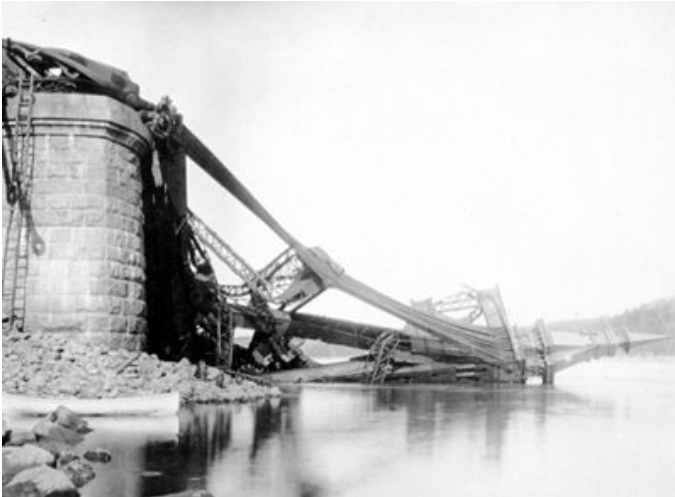
After Ted presented to the APGA community in June 2022 on “Failure is Normal: A Tale of Two Bridges” (the Quebec Bridge and the Westgate Bridge) (link to APGA webinar here), he went back and reviewed the list of similarities between the two bridge failures, and he realised that this similarity in particular represented an important message for engineers:
The designer / consulting engineer reputations went unchallenged.
The engineering firms engaged in both cases were assumed to be competent by reputation alone, but that “competency’ was not proven before selection in either case.
Below are not my words, they are Ted’s. Let’s discuss.
===========================
Questioning competency assessment
By Ted Metcalfe, Independent Consultant
In the Quebec Bridge (1907 and 1916) and West Gate Bridge (1970) failure events, more than 100 construction workers were killed partly as a result of failings by design engineers, yet the competency of those engineers was neither questioned nor proven before they undertook their design work.
Would Registration of engineers have prevented the West Gate bridge failure?
In hindsight, no one knows for sure, but I doubt it. Here’s why.
In 2018, the Victorian government introduced legislation to register professional engineers. This was actually a direct consequence of failed government regulation of the occupied building industry over previous decades; however rather than admit failure, governments prefer to identify scapegoats.
Starting about three decades ago, building regulations were progressively modified to “encourage economic activity and create jobs”; and bureaucrats created “deemed to comply” interpretations of the Building Code; all of which collectively allowed non-compliant materials and dodgy practices by developers to proliferate.
I strongly suspect that even if the Victorian Professional Engineers Registration Act had already been in place when the West Gate bridge project was undertaken, the reputation of the design engineer was such that the government of the day would simply have declared that the firm was “deemed to comply” with the competency requirements of the legislation, and the tragedy would still have happened.
In Australia today we have a serious threat to public safety. Thousands of homeowners are stuck living in fire traps because of the flammable cladding debacle, and even more are struggling to get serious building defects rectified.
The government’s answer? …………. Make it look like building engineers are to blame!
Who says whether or not (Pipeline) Engineers are competent?
For many years our industry-specific pipeline systems standard (AS 2885) has required that it only be used by competent persons. Looking back now, I realise that engineering competency demonstration and assessment has been an issue in our industry for a long time, and it is still not resolved to my satisfaction.
About twenty years ago, some industry experts conducted a number of seminars to emphasise both competency and compliance with the AS 2885 suite of Standards.
They included a mock “court in session” role play to put individual engineers “on trial” for failure to comply with the requirements of AS2885; or for not being “a competent person” as required by AS2885.
In one session they picked me as the suspect, and of course I was judged by His Honour Haddow in the black robes and curly wig to be “guilty” of some crime we’ve both since forgotten.
However, I clearly recall responding to his sentence by demanding to know how the average pipeline engineer was supposed to determine or demonstrate competency as required by the Standard.
I don’t recall getting anything like a clear and concise answer back then.
How is engineering competency assessed now?
Competency based on the APGA PECS is currently assessed by a panel of engineers who review evidence submitted and interview the applicant. “Competent” or otherwise is essentially a judgement call.
The PECS originated back in 2008, when myself and others prepared a Business Case with a focus on training for pipeline engineers.
At the time, as part of our research I contacted Phil Hopkins, the eminent educator of pipeline engineers worldwide, and from my notes of our conversation it was his opinion that….
“…. competence can only be assessed by formal examination under controlled conditions with a clearly defined level of correct answers.”
It made sense to me back then (and still does) that in order to demonstrate that you have learned something you must be able to prove under test conditions that you have indeed retained the information.
Our recommendation for development and operation of industry-sanctioned training courses with examinations was not accepted by the Association Board at the time. Instead, a project was undertaken to develop the competency documentation (resulting in 240 competencies, the Pipeline Engineering Competencies System), for commercial entities to use as they see fit.
So now we have defined competencies for pipeline engineers which is certainly a good outcome, but the PECS approach alone is neither complete nor effective in creating change.
Why is competency demonstration not mandatory?
In my APGA Convention paper last year, “Pipelines and Public Safety: How Reliable Are We?”, I pointedly observed that even with the PECS in place, competency demonstration is still not mandatory for engineers in our own industry……. Why not?!
How should competency be assessed?
In my opinion, competency assessment should include an examination with a minimum pass mark.
I agree that competency assessment should also include a review of written submissions and an interview with a panel, but I strongly believe we should add a written examination to the process to ensure that the assessment includes a measurable component which is not simply a judgement.
Think about it………in order to obtain a driver’s license in Australia you must pass a written examination; but to practice engineering, as long as you have degree qualifications and some experience, neither written test nor license are required.
In his book “The Making of an Expert Engineer”, James Trevelyan makes some good points about competency assessment, and from the notes I made while reading his book:
A formal examination is a necessary part of training and motivates learning.
No exam means there is no motivation to really make an effort to learn.
The Canadian requirements for engineering competency assessment were prompted in part by the Quebec bridge failures over 100 years ago, and those still include a written multiple-choice Professional Practice Examination.
Visitors wishing to access the workplaces of most major operating companies in our own industry are required to undergo a formal induction process comprised of an on-line review of workplace safety and other corporate policy information, followed by a multiple-choice quiz to identify whether or not they have satisfactorily understood the important relevant information.
They must pass the quiz to be allowed on site, and usually must sign something to acknowledge that they have understood the information.
Can we implement exams for (Pipeline) Engineers?
We can.
With our PECS already defined, much of the hard work has already been done; it’s just our competency assessment process that needs changing.
The pipeline industry must voluntarily and formally recognise pipeline engineering competency at least as highly as visitor safety in the workplace.
If we do not, in the event of a serious accident our regulators may well impose upon us a legal “duty of care” to do so.
As I said in my recent webinar, and as demonstrated above for the occupied building industry, engineers are an easy target for blame.
What do you think?
Surely someone else out there is willing to express an opinion on a matter this critical for our industry.
Please consider this carefully, and you are encouraged to leave a reply either supporting or objecting to my positions.
If you are opposed to adding a written competency examination to the assessment; or if you do not agree that we should make competency assessment mandatory for pipeline engineers, please reply to join the conversation and explain your positions.
Even if you don’t have an opinion yourself, just forward this to someone else you know who should.
I always want to encourage debate about standards, ethics, and our industry. Every opinion matters.
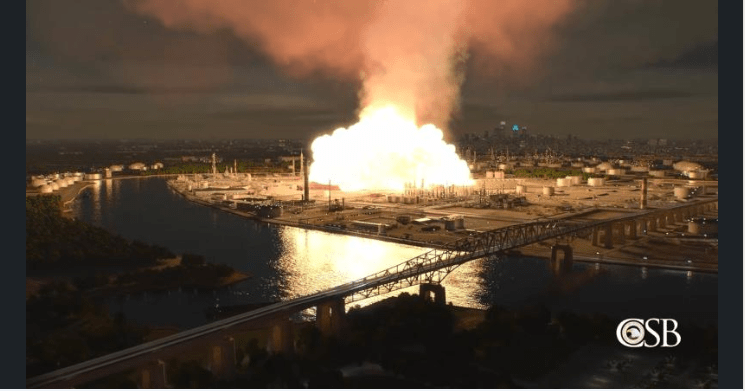
Here’s another contribution by Jan Hayes, who sent these links to me because of the relevance to the pipeline industry, and similarities between San Bruno, and Enbridge Marshall.
The trigger for the accident was corrosion in an old section of line that had not been recently inspected and did not comply with current mechanical/material standards for HF piping. Similar to San Bruno, we have latent mechanical integrity problems that have not been identified, partly due to grandfathering.
On a more positive note, the operator-initiated safety protocols within 30s of the initial leak significantly limited the amount of HF lost. This is in major contrast to the Enbridge Marshall case where the operators continued to ship through a failed line for an extended period.
It could be interesting to compare the two in more detail.
Included in the email exchange was a response from Andrew Hopkins, Emeritus Professor of Sociology at ANU, who wrote: “The CSB really does make excellent videos. I was stimulated to take a look at the CSB written report. It too is very good- much more coherent than for instance the Texas City Refinery disaster report. In particular it includes an excellent accimap, one of the best I’ve seen.”
The Pipeliners Podcast has been around since 2017, hosted by Russel Treat in the USA. I started listening to it in its early days, and listened for a couple of years, but recently took it off rotation in a podcast cleanup (it’s pretty focussed on US pipelines).
Fortunately, though, I’ve become aware that one of our very own, Jan Hayes, was recently interviewed on the podcast, not for just one episode, but two. So I’ve added it back into rotation.
Jan is interviewed by Russel about organisational factors in pipeline incidents, and about one of our favourite topics, ALARP. Both episodes cover more than that, and provides a good introduction into risk management AS2885-style.
You can hear in Russel’s questions and responses how different it is managing risk in the US vs here in Australia.
The episodes are only about 30mins long – perfect company for your daily walk!
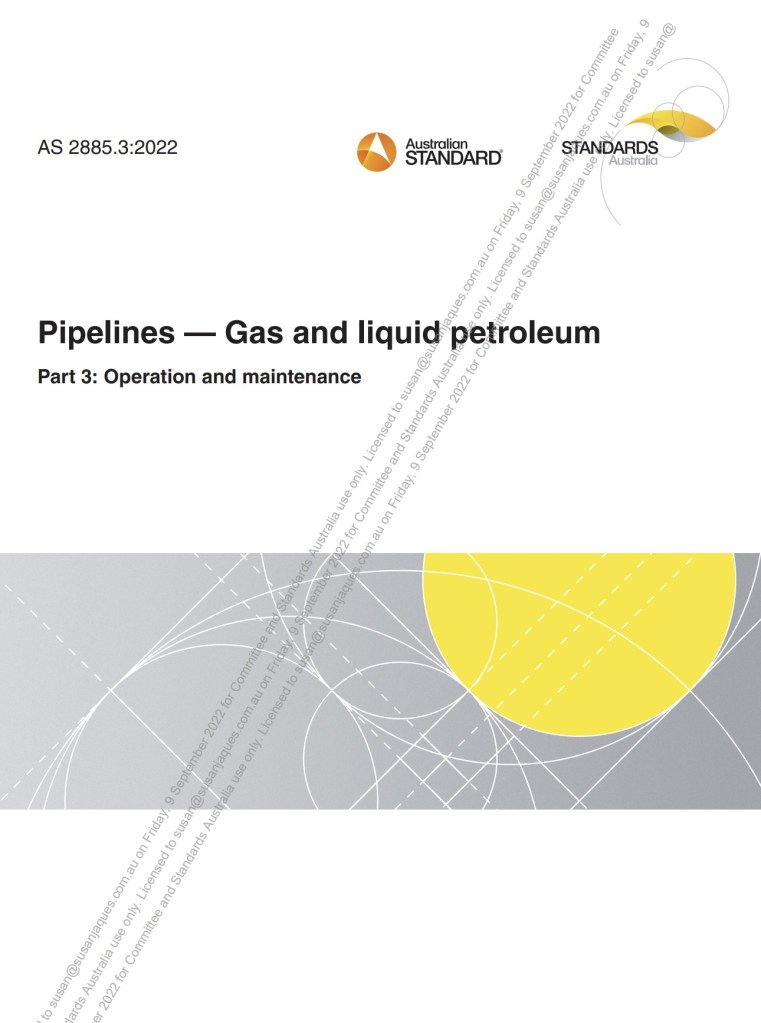
Today, Standards Australia has published the revised AS2885.3-2022, Pipelines – Gas and liquid petroleum, Operations and maintenance.
Congratulations and thanks to the Part 3 committee members, who worked hard for 5 years, through the pandemic and all, to reach this publication stage.
If you have subscription licensed access to Part 3, please make sure your provider has updated your copy on file.
Committee members can download a copy from Standards Australia’s SIM via your username and password. It is licensed only to you for your personal use, and is watermarked as such.
If you have questions about the publication, there are a few options:
ask your question or comment here below, directly on the blog (in a public forum)
you can contact the (now past) committee members if you know them: convenor Geoff Callar (retired from APA), or other key contributors such as Jeff Jones or Gabriel Pizani.
And, as always, you can email the generic info@as2885.info email address and we’ll get answers for you.
There’s no imminent plan for a launch via APGA for this, not in 2022 anyway. I’m hoping we can marshal a team to provide a seminar/workshop launch in Q1 2023, probably hosted in person in Sydney. Comment below or contact us directly if you’d attend a launch workshop for Part 3.
For the past 4 months I’ve been “promising” (indirectly and with lots of caveats of course) that AS2885.3 would be published in August. I had high hopes, but of course now it’s September so that promise hasn’t been fulfilled.
I followed up with Standards Australia this week, and they’ve apologised, and have prioritised it for publication ‘next Friday’.
So, look for AS2885.3-2022 to be available on September 9th (… or thereabouts?) (and, there’s another caveat…)
My recent webinar “Failure is Normal: A Tale of Two Bridges” generated some encouraging feedback, so I could be persuaded to present more webinars, if readers indicate sufficient interest. A couple of categories of possible topics come to mind; engineering practice, and more about learning from failure.
Engineering Practice 1) The Benefits of Engaging Independent Consultants (A discussion forum in which other independent consultants could also share their advice about how engaging independent consultants adds value to the pipeline industry.) 2) Dealing with Commercial Pressures on Engineers (My recommendations, plus an interactive session in which attendees are invited to speak up about pressure situations they have encountered and how they dealt with them.) 3) ECI and Relationship Contracting: • Common contracting strategy options and appropriate application for each; • Basics of “two stage” relationship contracting, risk sharing and mitigation, workshops recommended; pitfalls, advantages and benefits.
Learning from Failure 4) Sources of disaster information – Pros and Cons of each (Book recommendations, news articles, safety websites, Wikipedia, Royal Commissions, Inquiries, Coroner’s Reports, etc.)
If you liked “A Tale of Two Bridges”, there’s a couple more “disaster parallels” opportunities I could develop and present such as: 5) Runaway Trains: The Lac Megantic disaster and the BHP ore train in the Pilbara. 6) Deadly Thrill Rides: The Royal Adelaide Show (2014); Dreamworld (2016); and USA events.
There may be other topics that you would like to see addressed in a webinar, so just reply to let me know what interests you. Ted Metcalfe
There is enough interest in Ted Metcalfe’s book list, and the idea of learning from failures, that it’s time to set up a book club. It’s a book club for people in the pipeline engineering industry, interested in learning from failures. Answering the question “what happened?”, and being better engineers and pipeliners because we’ve paid attention to the lessons.
In a “book club” type of environment, we can assign ‘required reading’, but more importantly, there is the opportunity to discuss what we’ve read, learned or thought about each month. That’s what I’m looking forward to.
The first meeting, a kickoff meeting to check interest and participation, will be held on Monday August 1st , 16:30 – 17:30 AEST, via either Zoom or MS Teams.
Put it in your calendar for now. In the next week or so, I’ll set up a signup link and meeting invitations to confirm interest. That will appear here on the blog.




 AS2885-INFO.blog