AS4822:2024

The standard for field joint coatings, AS4822, is included in ME-038’s portfolio.  We usually just refer to AS2885, but AS4822 is part of the team too.

This makes sense, because what other committee would look after a standard about coating joints of pipelines in the field? 

So also, there’s an argument that in the ‘one document’ scenario for AS2885, maybe that we roll in the AS4822 content as well.  So that’s another 67 pages. 

Sixty-seven pages of very specific information, specific to the coatings we put on those welded joints in the field. 

AS4822 covers topics such as the application procedure specification, and the surface preparation requirements, and then the specific requirements of 5 types of field-applied coatings: 

  • Petrolatum and polymeric tape coatings
  • Heat-shrinkable coatings
  • Fusion-bonded epoxy coatings
  • Liquid applied coatings
  • Amorphous low viscosity polyolefin coatings (ALVPC)

AS4822:2018 has now been revised, and will be published on or about October 18th, 2024

According to the preface, the major changes between 2018 and 2024 are:

  1. Type tests are more clearly identified and a definition has been added
  2. Some tests have been reclassified as Type tests.
  3. An electrical resistivity type test has been added for liquid applied coatings.
  4. The peel rate for polymetric tape lab testing has been changed to align with the rate used for field testing.
  5. Some peel test requirements have been changed for tape coatings and ALVPC.

Reading those changes makes me think the content of this Standard is very unique to those in the coatings arena, and maybe inclusion in the wider AS2885 isn’t wise.  So, I’m looking for those for and against this idea to let me know why, either way.

On another thought train, AS2885.1 Section 8 is Corrosion Management.  When I’m talking to new members of the industry about coatings, and how to choose them, I often say, if you want to know which coating is the best, just ask the salesperson, they’ll tell you.  (!)  And then I remark that it’s really important to know what factors are important to your project, so that the right coating is specified. 

I mentioned this, that we don’t provide much guidance to decide on coatings, to the esteemed Geoff Cope, former chair of many corrosion/coating related committees and groups.  I mentioned that we don’t really give much guidance in AS2885 to help a person choose which coating to specify.  This was probably more of a decision issue when Yellowjacket HDPE coating was in competition with FBE coating… but I wonder if we could still give more guidance here.

Geoff Cope pointed me to some appendices in AS4822 for coating purchasing assistance. 

Appendix A of AS4822:2024 provides a list of “Purchasing Guidelines”. The appendix contains “advice and recommendations on the information to be supplied by the purchaser at the time of inquiry and order and by the coating applicator.  It aims to avoid misunderstanding and to result in the purchaser receiving satisfactory products and service.” 

There’s also Appendix K of AS4822:2024, which is a “Guide to compatibility of coatings”, which, in table format, advises on the suitable compatibility of four pipeline coatings used in Australia (FBE to AS4321, Extruded 2-layer polyethylene, FBE to AS3862, and 3-layer polyolefin), against seven Field Joint Coating types.

Lots about coatings to get one’s head around!

Thanks to the ME-038-08 subcommittee which looks after the corrosion/coating standards, AS4822 and AS3862.  The current convenor of that subcommittee is David Anderson.  Thanks to all subcommittee members for your hard work, in particular in this case Ashley Fletcher who did an enormous amount of detailed wordsmithing for this revision of AS4822.

Susan, September 30, 2024
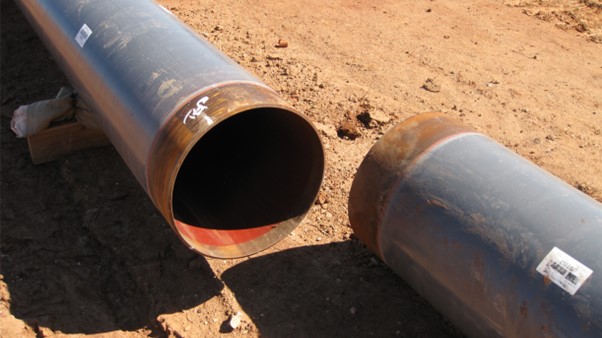
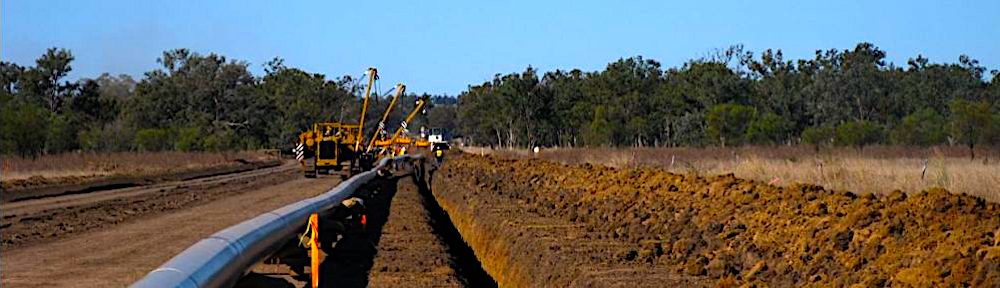
Field joints waiting to be welded, and then the bare steel will be coated in the field, to prevent corrosion.

Random Updates

A few things going on in the past week that can be classified as ‘random updates’:

CSA Z767 Process Safety Management Standard

I listened to the podcast “Process Safety with Trish & Traci”, the episode dated 20Aug2024, titled “World’s first: process safety management standard”. 

It is, apparently, an industry-agnostic standard, setting benchmarks for organisations not covered by traditional process safety approaches.  It was originally published in 2017, and recently updated in 2024 to incorporate industry feedback and expand key sections.

If you’re already aware of this one, let me know what you think.  I’ll be reviewing it to see if there’s anything we can learn from it to improve our own approach to process safety for our Australian long distance, high pressure, buried pipelines that go through public spaces.

Protocols for Studying & Learning

I’m always interested in learning about learning, and better understanding how we can improve our competence and knowledge, especially about things we need to know about.

The Huberman Lab podcast dated 26Aug2024, “Optimal Protocols for Studying and Learning” was really interesting to me. It essentially debunked the idea that reading something over and over again is an effective way to learn anything. No, it’s when we ‘test’ ourselves to recall what we’ve just read – that’s when the learning occurs.  (Wish I’d known that in my Uni days.  Though I suppose it was all those rather competitive group discussions I got involved in that helped me learn it, after all).  So I’m taking that on board (we never stop learning, right?).  Now I know that if I need to remember something, it’s more effective to read it until I understand it, and then make the effort to put the book aside and retrieve the information from my own brain.

AS2885.1 Revision Scoping

Thanks to James C for the recent meeting to continue the effort to resolve the scope of the next Part 1 revision.  We currently have about 100 line items on the scope list; just about every Section has a line item against it for revision.  Some are editorial, many are technical.  We are always striving to improve the content of our Standards.

A relevant question was asked by a member of the team:  how do those of us involved with current revisions factor in the upcoming “one-document” strategy for AS2885?  The simple (perhaps unhelpful) answer is to, for now, carry on with ‘business as usual’ how we’ve done it so far, with the editing and the changes to the text.   The strategy is still being developed, and the long-term plan to combine the parts should not stop the words-work of editing the Standard to improve the technical content.

What might help is to think about what ‘topic’ is being worked on, i.e., can it be tagged with a category, like “corrosion”, or “external interference”, or “fluid control”.  As mentioned, there are many advances in AI and text-based engines which may mean the way Standards are written (and read) will evolve to be much more tied to ‘tags’ and keywords, so that all information related to that tag can be brought together when asked. 

But in the meantime, we still need to write the relevant words.  No AI chatbot can replace the knowledge and experience in those rooms of committee work. 

Thanks again to all involved in writing the words (and then interpreting them later when someone reads it completely differently to what we meant).  Writing Standards is an ongoing, challenging task.

Susan

Sept 25, 2024

Guidance

I had a great chat with AS2885 legend Peter Tuft last week.  We reminisced on the creation of Part 6 during the revision of Part 1 from 2013 to publication in 2018.  Oh how different the pipeline world was in 2013!  No talk of hydrogen.  No talk of “energy transition” nor “shut down the fossil fuel industry”.  Back then it was go go go, and then some.  And oh it was fun.  This enthusiasm and expansion of the industry was particularly because of the LNG export pipelines being built in Queensland at the time; our first foray into 42” pipelines in Australia.  Those were the days, eh.  And it was only ten years ago…

So anyway, back then it made a lot of sense to separate the SMS (safety management study) process out of Part 1, which is the Design and Construction part of the AS2885 series. 

The SMS process, previously simply referred to as “pipeline risk assessment” when it first appeared in the 1997 version of AS2885.1, had evolved enormously over the years. 

We were especially pleased, as we congregated in early days of the revision, to discuss the application of the process to more than just detail design. 

It was proving to be an extremely useful tool to apply for operating pipelines as well, to review and confirm the safe operational practises of existing pipelines. 

This is why the separation of the process out of the Design and Construction document, into its own document (Part 6), made so much sense at the time.

In 2013 through to 2018, we also still used paper copies of the Standard mostly.  Usage of online or electronic versions of the documents was not the norm.  Many, maybe even most, of us out in the wilds of the industry were still using hard copy versions of the Standard through those years (and even now, I’ll admit). 

I will capitulate, though, that Peter Tuft himself has used exclusively electronic versions only, for many, many years – since about 2015 or earlier, I’ll bet. 

All this preamble to say thanks to Peter for all his work to separate the Parts.  Now we’re going to undo all that work, and put them together again! 😊 

Guidance Words / Appendices.

Peter and I also talked about the fact that probably half of the ~1000 pages of AS2885 are guidance words, contained in the Informative appendices. 

We talked about whether all that guidance and informational text needs to be, or should be, (shall be?) in the one-part Standard. 

This question comes up for discussion within the Main Committee every few years.  I’m always willing to listen to the arguments – take it out or leave it in – but usually land in the same place:  if we take it out of the Standard, how do we ensure that users of AS2885 actually utilise the guidance to help with using the Standard.  If it’s in a separate document, I can almost guarantee that it won’t be sourced to be read, particularly by those who need it most: those in a hurry to just figure it out in our ‘just in time’ style of engineering these days.

So while we contemplate the one-part AS2885 Standard, we need to consider how much of that guidance we include.  And how it’s included. 

If we consider the online / electronic approach, then I like to imagine a style similar to the Canadian CSA Z662 approach:  they have hyperlinks to the guidance within the pdf.  Now that’s an elegant solution. 

(So far, Standards Australia isn’t on board with this type of document.  But our publication date is still years away, so here’s hoping for that evolution before we publish).

I also have another vision of the future use of complex Standards like AS2885:

We ask the document “AI” to produce a collated bespoke Standard that addresses the issue we need resolved at that moment. 

For example: “Produce for me an AS2885 Standard for road crossings”, or “Produce an AS2885 Standard for Location Classification”.  And the AI (c’mon, it’s inevitable) crawls through the 1000 pages and just ‘prints’, or returns, the relevant requirements to that issue along with all the guidance and explanatory text.  But of course then we lose the context and flavour that the poor ole standards writers have agonised over during the five years spent writing the darn thing.  So I’m also hesitant to say that’s a good way for the future.  But alas, it might be inevitable.

So when you’re thinking about Standards this week, think about how much guidance and explanatory text should really be included in a Standard.  The Standard is meant to set out the minimum requirements.  If we stick to that definition, perhaps there should only be shall statement in the document, and everything else should not be in the Standard, but found in separate guidance documents.  There’s fighting words.

Susan
September 16, 2024

Contributors and Contributions

In late August, I went to a Standards Australia “Contributor Forum 2024”.  These contributor forums are, according to Standards Australia “an opportunity to come together to share initiatives we have delivered or are currently in progress, and seek feedback and insights to areas of focus where we can deliver the greatest value to our stakeholders.”

These have been done annually for awhile; the last one I went to was in 2019. 

The thing with getting feedback, is actually taking it on board and then reporting back.

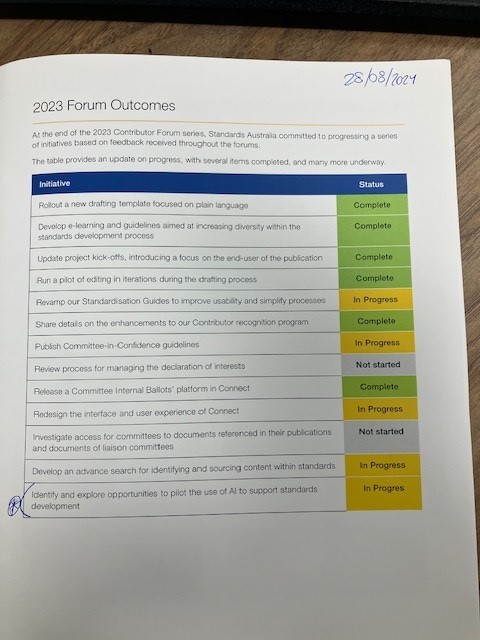
I was pleased to see in the first few pages, a clear table of the status from 2023:

The item I like is the last one – the use of AI to support standards development.

This is an item I raised as an opportunity to really streamline and speed up the production of Standards.  Really, all that time spent on cross-references, grammar, and nitty-gritty details are perfect for AI to take over the bulk of the “styling and editing” that seems to take months currently.

Other noteworthy focuses are:

  • An “onboarding manager” for new committee members
  • Better guidelines about ‘committee in confidence” and what that means. … The quip at the time was that, once you join a standards committee, what, you’re not allowed to talk about standards anymore?
  • Management of conflicts of interest process is getting a review.

Something that gets muddled up a lot is when Standards Australia asks themselves “who are our customers”.  Their answer is:

  • Users of the standard
  • Standards development (proposals, drafting, publications)
  • Internal (employee Experience)
  • Nominating Organisations
  • Buyers of the standard
  • Members of the public
  • Committee members

This is a thorough list.  The problem is, that is a very diverse list of seven.  The user of a standard (who doesn’t even know who was on the committee) is very different to the committee members who wrote it (and therefore have a more deep knowledge of how it got there). 

That’s why we developed our wiki, and this blog.  It’s to serve the first on that list: the user of the standard.  We’re here to help.

And so, after the Forum concluded, we had some lovely drinks under the Story Bridge, and I got to chat with people who are involved in a plethora of standards:  wood, electrical, HVAC, and digitisation.  I’m glad I went.

To close out this post with some good news:  the ME-038 Main Committee has a new Project Manager.  We’ve appreciated Andrew McKay for many years, and we wish him well as he moves onto other committees and roles, still within Standards. 

Our new PM, Simon, is young, just 2 years with Standards so far…. and he has a legal/law background from uni/studies.  I think that will be fantastic.

And the best part is, when I mentioned to him our audacious goal to combine the seven parts of AS2885 into one, he said, oh yeah, ok, …I’m going through that right now with another committee. 

“Great, so you’ve got some recent experience”.

“Yes.  And, you should know:  they have spent the last six months meeting every two weeks, to resolve all of the fiddly overlaps, repeats and contradictions they keep finding.”

“Ah.  Ok”   
*puts note into 2028 calendar:  busy all year on AS2885*

Susan
September 9th, 2024

Revival / Restart / Rejuvenate : Hello, I’ve missed you!

Image from Unsplash

I will briefly wax lyrical here about revivals, restarting, and getting rejuvenated. 

There’s something about a ‘restart’ of a past habit or dedication or hobby.  Rejuvenating is a good word – it means bringing renewed life to something old by giving it a new vitality.  It’s the process of “freshening” something up by reviving it.   

And besides, revivals are kind of a ‘thing’ right now anyway:  look at the number of GenX bands that are touring again.  Everything old is new again, or at least coming around at us again, right?

So with the calendar turning over to September, I figured it’s time to get back to it.  

September has a feeling of ‘restart’ for me; I’ve heard it suggested that the new year should really start in September, instead of January… because September is when the northern hemisphere school year starts.  “Back to school” and all that.

Though I’ve lived in the southern hemisphere now for half my life, where September is spring and the school year is more calendar oriented (Feb-Nov), so maybe September doesn’t mean as much as it when associated with the start of the school year …. I did grow up in the northern hemisphere, and September still has this ‘back to school after the holidays’ feel about it for me. 

Which brings us to this little blog to support the AS2885.info wiki.  It has languished for 18 months, and it’s time to bring it back to life. 

A key reason for starting up here again is that I want to – need to – be able to think out loud, think in public. 

We’ve taken on a significant project to combine the 7 parts of AS2885 into one.  At the outset, back in February 2023 when the decision was made by the AS2885 Main Committee, I said back then that it was a 10-year project.  I’d like to say it still is, (still 10 years away), when I think of what needs to be done… but I’m also one who tries to stick to schedules.  So, some progress needs to be made.

I’ll be using this platform to formulate thinking around the structure of a new (re-)combined AS2885 – hence the ‘thinking out loud’. 

By the way, AS2885 used to be one document, way back in 1987.  I wonder if anyone out there still has a copy of that yellow 1987 version of AS2885!  I remember seeing it on someone’s desk when I first arrived in Brisbane in 1997 (the 1987 version had already been superseded by the 1997 version … I do still have my copy of the 1997 AS2885.1!).

A good history of AS2885 can be found on the AS2885.info wiki here.

So now we look to the future. 

A first step we’ve taken, while small, is the renaming of the Standards Australia committee.  Previously it was “Petroleum Pipelines” within the Standards Australia terminology. 

This is the Committee name, not the Series or Standard name. 

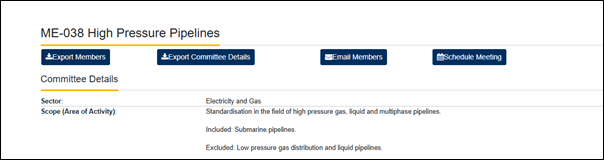
Our committee is now named “ME-038 High Pressure Pipelines”. 

This image is from Standards Australia, but via logging in as a Committee Member.
I couldn’t figure out how a member of the public (non-committee member)
might find out committee names and details.

This allows for more flexibility and scope to cover other contents including petroleum.  In reality, of course, it is already written into the AS2885 Standard allowing other fluids, but, of course, it’s really written for, and focusses quite specifically on, as I like to say: 

High-pressure,
cross-country,
hydrocarbon gas or liquids
carried by buried steel pipelines

Our strategy in widening the scope includes simply changing the series title, which is currently “Pipelines – gas and liquid petroleum”.

Next, we’ll work on a reissue the series under the new title:

“AS2885: Pipeline Systems – High Pressure”. 

Determining that title was based on a robust discussion by the Main Committee in February 2023, which included many terms that didn’t get included (Transportation, and Fluid, being the two stand outs left out). That’s what committee work is about: consensus!

And anyway, the title isn’t usually a full representation of the allowed scope anyway (given that, for example, slurry lines are designed to AS2885, and slurries aren’t gas or liquid petroleum) … but the title does direct a new reader into a certain thought about what the standard covers.   

(By the way, it’s already been brought to my attention that we may need to define “high pressure”… but I’m not sure…). 

So here we go: here’s to the future.

My writings here will evolve over the next weeks & months. 

I’ll ask questions, I’ll give my views, I’ll think out loud about many things, look for input, advise on potential decisions, muse about many things.

Maybe the first question is, how should ‘high pressure’ be defined, or, does it need to be?

Obviously, this is not a Standards committee, and there is no formal connection here to a revision to the standard. 

Nothing that is written here can be taken as anything formal. It’s just musings and discussion.

So, contributing here doesn’t mean much … but it could mean a lot, if you know what I mean. 

These will be informal discussions by technically-minded people like me and you, about how we might make an existing, and well-regarded, Standard, better.

Here’s to the future – I’m looking forward to it!

Susan / Sept 2, 2024